
Automated Weaving Techniques Modern denim fabric is produced using automated shuttle-less looms, such as air-jet or projectile looms, which enhance precision and speed. These looms reduce yarn breakage and improve fabric consistency, ensuring uniformity in texture and strength.
Blended and Engineered Fabrics Manufacturers now incorporate innovative materials like Tencel, hemp, and recycled polyester into denim blends to enhance durability, stretch, and environmental sustainability. Engineered denim with variable stretch zones provides comfort while maintaining structural integrity.
Precision Indigo Dyeing Advanced dyeing techniques, such as foam dyeing and continuous dyeing systems, minimize water usage while ensuring deep, long-lasting color penetration. Sulfur and natural dyes are also gaining popularity as eco-friendly alternatives to traditional synthetic indigo.
2. Laser and Ozone Finishing Technologies
Laser Fading and Distressing Laser technology has revolutionized denim finishing by replacing manual sandblasting and chemical washes. High-precision lasers create custom fades, whiskers, and distressed effects without harmful chemicals, reducing environmental impact and labor costs.
Ozone Washing Ozone treatment is an eco-conscious alternative to traditional stone washing. It bleaches denim using ozone gas, significantly reducing water consumption and eliminating the need for pumice stones and harsh chemicals.
3. Automated and Robotics-Assisted Sewing
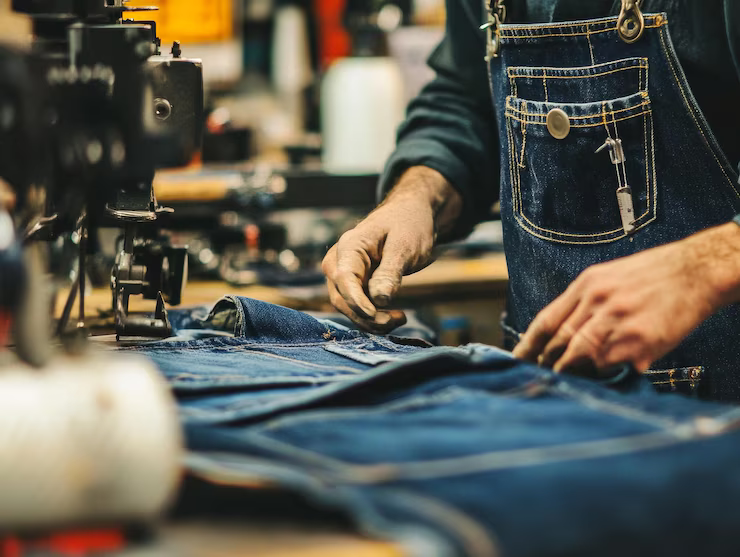
Computerized Stitching Machines Automated sewing machines equipped with programmable patterns ensure consistent stitch quality and reduce human error. These machines handle complex stitching techniques, such as flat-felled seams, with high precision.
Robotic Assembly Lines Robotic arms are increasingly used fortasks like pocket placement, belt loop attachment, and hemming. These systems enhance production speed while maintaining high accuracy, reducing waste and labor dependency.
4. Sustainable Manufacturing Practices
Waterless and Low-Wash Techniques Brands are adopting waterless dyeing processes and dry ozone treatments to minimize water usage. Additionally, enzyme-based bio-washing replaces traditional stone washing, reducing environmental harm.
Recycled and Upcycled Denim Post-consumer recycled denim is being reintegrated into production, reducing textile waste. Upcycling initiatives transform discarded jeans into new garments, promoting circular fashion.
Energy-Efficient Production Manufacturers are investing in solar-powered factories and energy-efficient machinery to lower carbon footprints. Smart lighting and heat recovery systems further optimize energy consumption.
5. Advanced Quality Control and Testing
AI-Powered Inspection Systems Artificial intelligence detects fabric flaws, stitching defects, and color inconsistencies with high accuracy. Automated inspection systems ensure only high-quality products reach consumers.
Durability and Wear Testing Advanced testing methods, such as accelerated wear simulations and tensile strength assessments, guarantee that jeans withstand long-term use without compromising comfort or appearance.